
Pressure adjustment range of centrifugal air compressor
Release time:2026-11-23 Click:0
In industrial gas supply systems, centrifugal air compressors are widely used in petrochemical, metallurgy, air separation, thanks to advantages such as high flow capacity, smooth operation, and oil-free gas delivery. Unlike positive displacement compressors, a centrifugal air compressor imparts kinetic energy to the gas through a high-speed rotating impeller and then converts that kinetic energy into pressure energy in a diffuser. This working principle gives its pressure regulation a distinct "window" characteristic — there is both an adjustable upper limit and an unbeatable lower limit. A thorough understanding of the composition and constraints of the pressure regulation range is of great significance for equipment selection, control strategy development, and reliable, economical operation.
I. What Is the Pressure Regulation Range
The pressure regulation range refers to the interval within which the discharge pressure of a centrifugal air compressor can be effectively controlled and maintained while ensuring reliable, stable, and continuous operation.
This interval is not simply a numerical band, but is jointly defined by three boundaries:
- Upper boundary — constrained by the unit's structural strength, sealing class, drive power, and the design pressure-bearing capacity of the process system;
- Lower boundary — constrained by the surge margin, i.e., when pressure is high while flow is low, the impeller will enter a surge condition;
- Operating-condition boundary — constrained by the shape of the performance curve under actual conditions such as current speed, inlet temperature, and molecular weight.
Therefore, the "regulation range" referred to in engineering is essentially an operating window subject to multiple constraints, rather than a pressure band that can be set arbitrarily.
II. Key Factors Affecting the Regulation Range
1. Inlet Guide Vanes (IGV)
Inlet guide vanes change the impeller's inlet conditions by pre-swirling the incoming gas, and are one of the more commonly used load-regulation methods for centrifugal air compressors. Varying the opening allows continuous and rapid adjustment of flow and pressure without significant changes in speed, offers good response characteristics, and facilitates coordination with fluctuations in downstream gas demand.
2. Anti-Surge, Venting, and Recirculation
When system demand drops and the operating point approaches the surge line, the anti-surge valve opens, venting part of the discharged gas or recirculating it to the inlet to maintain a minimum flow through the unit. Although this mechanism expands the boundary of reliable operation, it also means that in the low-load region, pressure regulation capability is achieved at the expense of energy efficiency.
3. Inlet Conditions
Inlet temperature, atmospheric pressure, and gas composition (molecular weight) all significantly affect the position of the performance curve. During hot summer conditions, the discharge capability at the same speed decreases noticeably, while fluctuations in molecular weight directly alter the head characteristic. Therefore, the regulation range is not static; it should be regarded as a quantity that changes dynamically with season, region, and medium conditions.
4. Number of Stages and Intercooling
Multi-stage compression combined with interstage cooling reduces the pressure ratio per stage, improves compression efficiency, and extends the upper pressure limit achievable by the whole machine. Different stage configurations result in different starting points and spans of the pressure regulation range.
III. Engineering Significance of the Regulation Range
1. Selection Stage
During selection, one should not look only at the nameplate rated pressure, but pay closer attention to how well the regulation range matches the actual load curve. If a plant operates for long periods at the edge of the regulation interval, this implies frequent anti-surge actions and persistently high energy consumption; conversely, if the unit's capacity far exceeds demand, it remains in a throttling-regulation state for extended periods, which is equally wasteful. The ideal situation is for the common operating point to fall in the middle-to-optimal region of the regulation window.
2. Operational Economy
The width of the regulation range is directly related to the unit's efficiency at partial load. The larger the anti-surge valve opening and the greater the vented volume, the lower the proportion of useful work. From an operational perspective, therefore, expanding the high-efficiency regulation range and compressing the low-efficiency regulation range is one of the important directions in the evolution of centrifugal air compressor technology.
IV. Common Misconceptions
Misconception 1: "The pressure can be adjusted to any value desired."
The lower pressure limit of a centrifugal air compressor is constrained by surge, and the upper limit by mechanical and system pressure-bearing capacity; the adjustable range is finite and conditional.
Misconception 2: "The regulation range is a fixed nameplate parameter."
It varies dynamically with speed, inlet temperature, and gas composition, and must be judged in combination with real-time operating conditions.
Misconception 3: "Long-term low-load operation comes at no cost."
Low load often means continuous anti-surge intervention, with significant increases in both energy consumption and wear, and a clear deterioration in economy.
Misconception 4: "Pressure fluctuations indicate a problem with the equipment."
Small fluctuations are normal during combined-control switching or sudden load changes; the key is whether the fluctuations converge and whether the anti-surge valve acts frequently.
V. Operational Management Recommendations
1. Establish operating-condition records — Log the actual adjustable pressure intervals under different seasons and loads to form a map of the unit's specific operating window.
2. Emphasize anti-surge calibration — Regularly verify the action line and response speed of the anti-surge valve to ensure reliable boundary protection.
3. Monitor inlet conditions — Continuously track inlet temperature and pressure, and promptly revise control settings to prevent operating-point drift caused by environmental changes.
4. Focus on trends rather than single points — Use trend analysis of parameters such as vibration, temperature, and differential pressure to anticipate any decline in regulation capability.
5. Optimize load distribution — When multiple units operate in parallel, distribute the load among them reasonably so that each works within its own high-efficiency regulation region.
The pressure regulation range of a centrifugal air compressor is a dynamic window shaped jointly by thermodynamic characteristics, mechanical strength, control logic, and external operating conditions. It is not a line that can be set at will, but an area that requires careful management. For users, what truly matters is not "how much it can be adjusted to," but "under what conditions, at what cost, and how stably it can be maintained at a given value." Only by understanding the regulation range from the perspectives of the unit's full life cycle and overall system energy efficiency can reliability, stability, and economical operation be unified.
Hot products
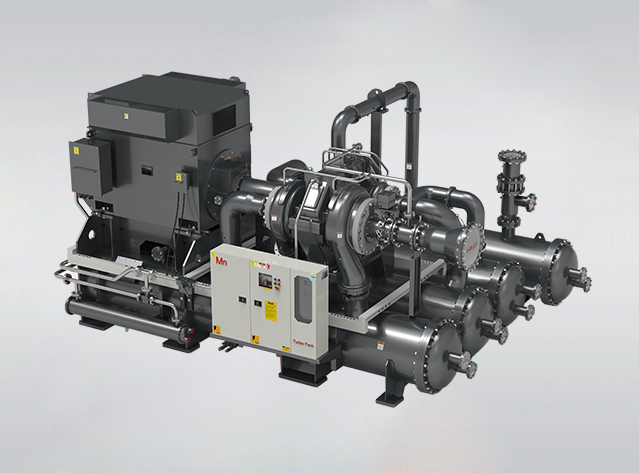
Mn (H) series centrifugal compressor
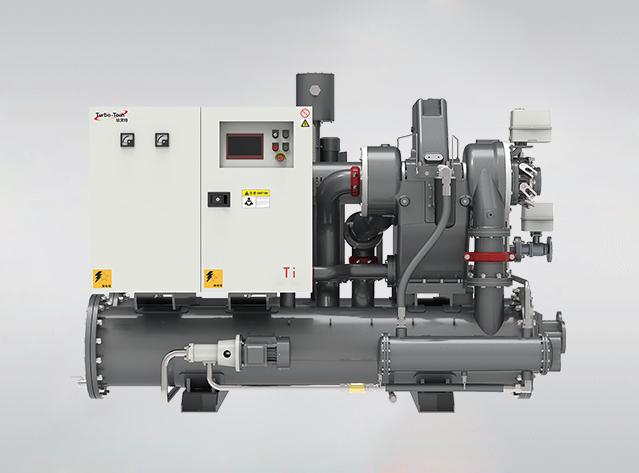
Ti series centrifugal air compressor
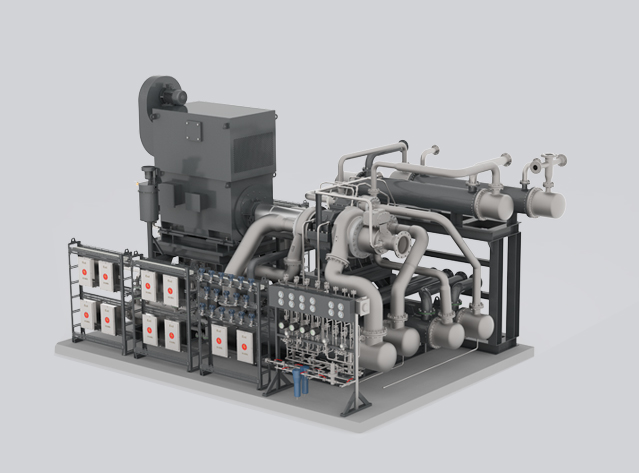
Ra series process gas compressors
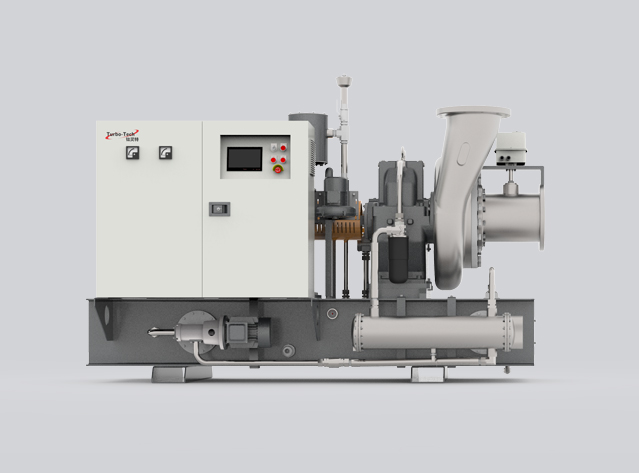
Ni series steam compressor
Tel:400-886-1856/+86 13395157738(Simon)
E-mail:sales@turbo-tech.cn / simonjin@turbo-tech.cn


