
Structure, Working Principle, Advantages and Disadvantages of Centrifugal Compressors
Release time:2026-11-20 Click:11
In modern industrial systems, gas compression equipment is an indispensable type of power machinery. With characteristics such as large flow rate, high rotational speed, and smooth operation, centrifugal compressors have found extremely wide application in petrochemicals, natural gas transmission, metallurgy, and other fields. For engineering and technical personnel, understanding their internal structure, working principle, and strengths and weaknesses is a prerequisite for proper selection, rational operation, and scientific maintenance. This article from Turbo-Tech systematically addresses these three aspects.
Turbo-Tech Introduction: Structure, Working Principle, Advantages and Disadvantages of Centrifugal Compressors
I. Basic Structure
Although centrifugal compressors come in a variety of external forms, their internal construction follows a similar logic and can generally be divided into two major parts: the rotor and the stator.
The rotor is the high-speed rotating component and the core of energy transfer. It consists mainly of the main shaft, impeller, balance disc, thrust disc, and coupling. Among these, the impeller is often referred to as the "heart" of the compressor — it is here that the gas gains energy under the driving action of the blades. The balance disc and thrust disc counteract the axial forces generated during operation, keeping the rotor stable at high speeds.
The stator comprises the casing, inlet chamber, diffuser, bend, return channel, volute, and various sealing devices. The casing withstands the gas pressure and supports the internal components. The diffuser has a flow passage that gradually widens along the flow direction, causing the airflow to decelerate and its pressure to rise. The bend and return channel guide the gas into the next-stage impeller, while the volute collects the discharged gas and conveys it to the pipeline. In addition, shaft-end seals (e.g., labyrinth seals and dry gas seals) directly determine whether the equipment can operate leak-free over the long term, making them a key element of overall machine reliability.
II. Working Principle
The working process of a centrifugal compressor is essentially one of continuous energy conversion: the prime mover drives the main shaft in rotation, and the impeller does work on the gas, converting mechanical energy into the gas's kinetic and pressure energy.
Specifically, the gas is drawn axially into the center of the impeller, rotates together with the impeller under the action of the high-speed blades, and is continuously flung toward the impeller's outer rim by centrifugal force. During this process, the circumferential velocity and the velocity of the gas increase markedly, and its kinetic energy rises substantially. The airflow then enters the diffuser, where the progressively larger flow cross-section reduces the flow velocity; by conservation of energy, the lost kinetic energy is converted into static pressure energy, and the gas pressure rises accordingly. Guided by the bend and return channel, the gas enters the next-stage impeller and repeats the process, achieving stage-by-stage pressure increase, before being collected and discharged by the volute.
From a thermodynamic standpoint, intercoolers are often installed between the stages of a multistage compressor to cool the interstage gas, thereby reducing the power required for subsequent compression and improving efficiency. This cycle of "impeller acceleration – diffuser pressure rise – interstage cooling" constitutes the main thread of the centrifugal compressor's operating mechanism.
III. Key Advantages
- High, continuous flow rate. The impeller's high-speed rotation delivers a steady stream of gas with virtually pulsation-free discharge, making it especially well suited to large-capacity duties; a single unit can reach flow rates of hundreds of thousands of cubic meters per hour.
- Smooth, reliable operation. With no reciprocating parts, it features low inertial forces, minimal vibration and noise, few wearing parts, and long maintenance intervals, allowing for prolonged continuous operation.
- Compact structure and low weight. At equal flow rates, centrifugal compressors are smaller and lighter than piston compressors, occupying less floor space and imposing lower foundation requirements.
- Clean compressed gas. With oil-free designs such as dry gas seals, the compressed medium is not contaminated by lubricating oil — particularly important for process gas and for the food and pharmaceutical industries.
- Ready automation and control. Stable operating parameters and well-established control methods make it easy to integrate with process systems and achieve unattended operation.
IV. Main Drawbacks
Low efficiency at low-flow conditions. The optimum efficiency region of a centrifugal compressor lies near its design flow rate; the farther the operating point deviates from it, the more efficiency declines. Consequently, in applications involving low flow rates and high pressure ratios, it is often less economical than a positive displacement compressor.
The above is an overview of the "Structure, Working Principle, Advantages and Disadvantages of Centrifugal Compressors". Through proper selection, careful adjustment, and reliable anti-surge protection, users can keep the equipment operating continuously within a high-efficiency, stable range.
Turbo-Tech has long been dedicated to the R&D and manufacture of centrifugal compressors, providing stable and reliable compression solutions for industrial users of all kinds.
Hot products
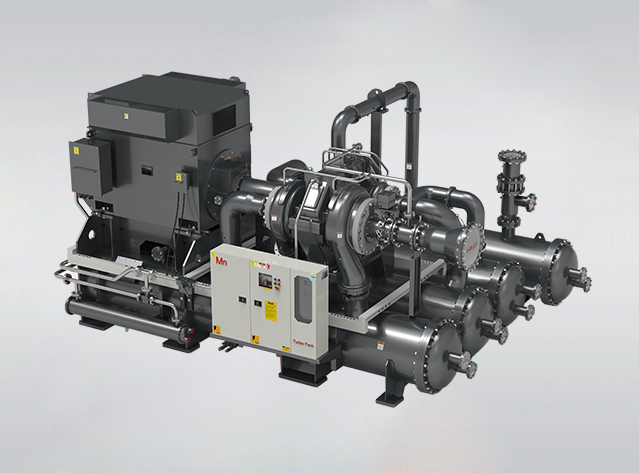
Mn (H) series centrifugal compressor
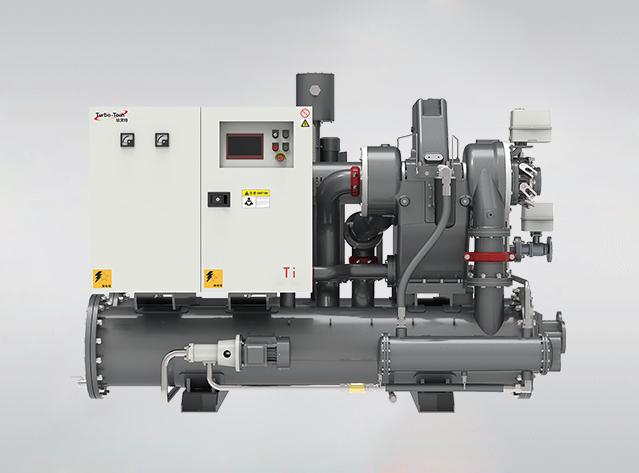
Ti series centrifugal air compressor
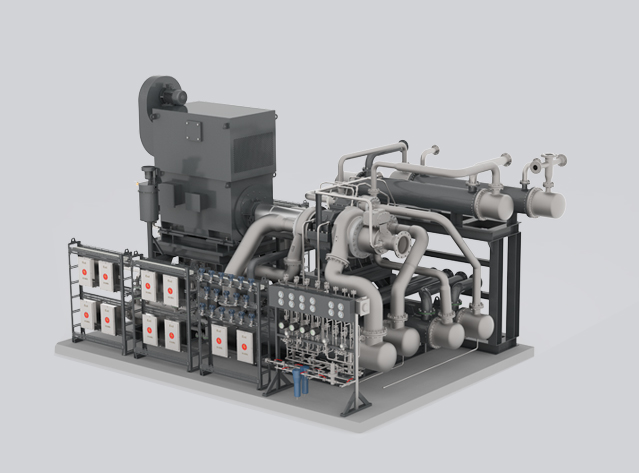
Ra series process gas compressors
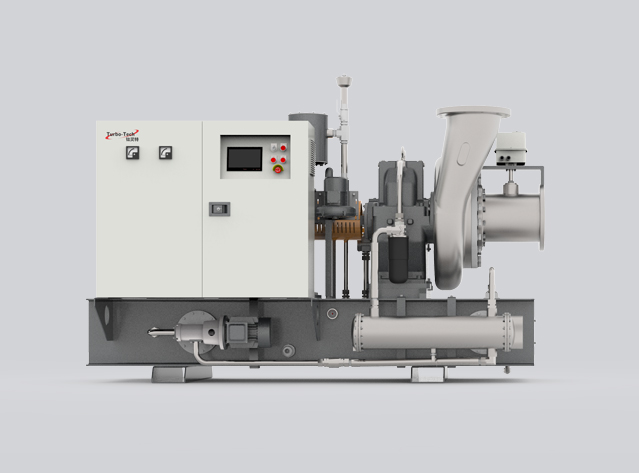
Ni series steam compressor
Tel:400-886-1856/+86 13395157738(Simon)
E-mail:sales@turbo-tech.cn / simonjin@turbo-tech.cn


