
Centrifugal Compressor Working Principle and Surge Causes
Release time:2026-09-23 Click:115
Working principle of centrifugal compressor and analysis of surge causes? In the field of industrial production, the application of compressor is everywhere, from petrochemical industry and natural gas transportation to metallurgy, refrigeration, electric power and other industries, compressed air and various process gases are inseparable from it. Among many compressor types, centrifugal compressor has become the equipment under the condition of large flow and low pressure with the advantages of compact structure, continuous and stable exhaust, oil-free lubrication and large single machine handling capacity. In order to use and maintain centrifugal compressor correctly, it is necessary to deeply understand its working principle and one of the more dangerous fault phenomena in operation-surge.
Turbo-Tech explains: Centrifugal Compressor Working Principle and Surge Causes
I. The Working Principle of a Centrifugal Compressor
The working process of a centrifugal compressor is essentially a process of energy conversion and transfer. A prime mover (an electric motor, steam turbine or gas turbine) drives the rotor to rotate at high speed; mechanical energy is first converted into the kinetic energy and pressure energy of the gas, and then, through the stationary components, the kinetic energy is further converted into pressure energy. The process can be broken down into three key stages:
1. Inhalation process
The outside air enters the air inlet chamber along the axial direction and enters the impeller core evenly after rectification in the convergent channel. At this time, the gas is in a low pressure state, so as to prepare for the subsequent compression process.
2. Impeller does work on gas.
This is the core link of energy input. Driven by the impeller, the impeller rotates at a very high speed (the common speed can reach tens of thousands of revolutions per minute). Under the action of the impeller blades, on the one hand, the gas rotates with the impeller to obtain a high circumferential speed, on the other hand, it is thrown to the outer edge along the radial direction. According to Euler's turbomachinery equation, the theoretical energy transmitted by the impeller to the gas is proportional to the square of the circumferential speed, which is also the fundamental reason why the centrifugal compressor can produce a higher pressure ratio. When the gas leaves the outer edge of the impeller, the pressure and velocity increase significantly.
3. Diffusion and exhaust
The high-speed airflow enters the diffuser. The flow cross section of the diffuser gradually expands, and the gas velocity decreases. According to Bernoulli's principle, kinetic energy is converted into pressure energy, and the gas pressure is further improved. Multi-stage compressor introduces gas into the next stage through a bend and a reflux device to repeat the above process, and then it is collected and discharged by the volute to obtain high-pressure gas.
Simply put, the working logic of centrifugal compressor is a trilogy of "rotating gas rejection-kinetic energy boosting-diffusion boosting". The essential difference between centrifugal compressor and positive displacement compressor (such as piston compressor) is that centrifugal compressor compresses gas by continuous flow of gas dynamics, and the exhaust gas is continuous and pulsation-free, and the flow rate is directly related to the rotational speed.
II. What Is Surge in a Centrifugal Compressor?
Surge is an unstable flow phenomenon that occurs during the operation of a centrifugal compressor. It manifests as periodic, large-amplitude fluctuations in the compressor's discharge flow and pressure, with the flow repeatedly swinging between positive and negative values; the unit is accompanied by strong vibration and a deep, rumbling noise, much as though it were "gasping for breath" — hence the name. Once surge occurs, the best case is a sharp drop in compressor efficiency and fluctuation of the process system; the worst case is blade fracture, seal damage, rotor imbalance, or the scrapping of the entire unit. It is a serious accident that must be strictly prevented.
III. The Root Causes of Surge
1. Excessively low flow — the direct trigger of surge
Every centrifugal compressor has its own inherent performance curve (the curve of pressure ratio against flow), on which there is a critical point known as the surge point. When the actual operating flow falls below the flow corresponding to the surge point, the direction of the airflow inside the impeller and the diffuser changes drastically; the flow separates severely from the blade surfaces and detachment (stall) occurs. The compressor can then no longer maintain normal pressure output, and the high-pressure gas at the outlet flows instantly back into the compressor, forming surge.
Excessively low flow is therefore the most direct and most common trigger of surge. Typical low-flow scenarios in production include a sudden drop in gas consumption at the user end, accidental closing of the discharge valve, and reduced load on an air separation unit.
2. Excessive piping-network resistance — the external driving force behind surge
A compressor does not run in isolation; together with the downstream piping network (pipes, vessels and the gas-consuming network) it forms a "compressor–network" system. An equilibrium relationship exists between the pressure characteristics of the network and those of the compressor. When the network back pressure suddenly rises — for example because the discharge valve is throttled down or the pipeline is blocked — and the compressor's discharge pressure cannot match the network pressure, the gas cannot be discharged smoothly, and the flow is choked down until it enters the surge zone. An imbalance between system back pressure and compressor discharge pressure is therefore another major root cause of surge.
3. Speed mismatch — the operating point deviating from the design point
The performance curve of a centrifugal compressor changes with rotational speed. If the actual operating speed deviates from the reasonable speed for the current operating condition (for example, because of a fault in the speed-control system or insufficient prime-mover power), the compressor's operating point may slide into the surge zone. Anti-surge control systems work by monitoring parameters such as flow (commonly characterised by throat differential pressure) and pressure, and automatically adjusting the blow-off valve or recirculation valve so that the operating point remains stable within the reliable region to the right of the surge line.
4. Other contributing factors
Internal leakage: wear on impeller wear rings and interstage seals causes gas to leak, reducing the effective flow and head and moving the operating point toward the surge zone.
Changes in gas properties: if the molecular weight, temperature or inlet pressure of the compressed gas deviates too far from the design conditions, the position of the performance curve also changes.
Improper start-up and shutdown: accelerating too quickly, or failing to blow off before shutdown, can very easily cross the surge line and trigger surge.
IV. Measures to Prevent Surge
In response to the causes outlined above, engineering practice has developed a mature system of prevention and control:
Install an anti-surge control system: continuously monitor the distance between the operating point and the surge line; as soon as it approaches the surge boundary, automatically open the anti-surge valve (blow-off or recirculation) to increase the flow through the compressor rapidly.
Follow operating procedures strictly: carry out start-up, shutdown and load changes slowly, avoiding sudden changes in flow.
Overhaul sealing components periodically: reduce internal leakage and keep performance stable.
Select and design with adequate margin: ensure that the surge line stays far away from the normal operating region and retain a sufficient reliability margin.
The above is an introduction to "How a Centrifugal Compressor Works and Why Surge Happens." By means of "the impeller rotating and doing work, and the diffuser converting kinetic energy," a centrifugal compressor achieves continuous, highly efficient compression of gas, making it an indispensable core item of equipment in the process industry. Surge, as an operating risk inherent to its characteristics, stems from the instability of the compressor–piping-network system caused by airflow separation at low flow. Only by thoroughly understanding the working principle, mastering the mechanism of surge, and complementing this with well-designed anti-surge control measures can a unit be guaranteed to run reliably, efficiently and stably over the long term.
Hot products
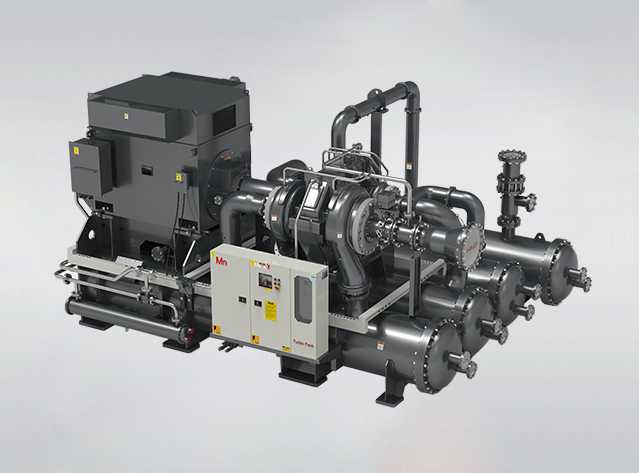
Mn (H) series centrifugal compressor
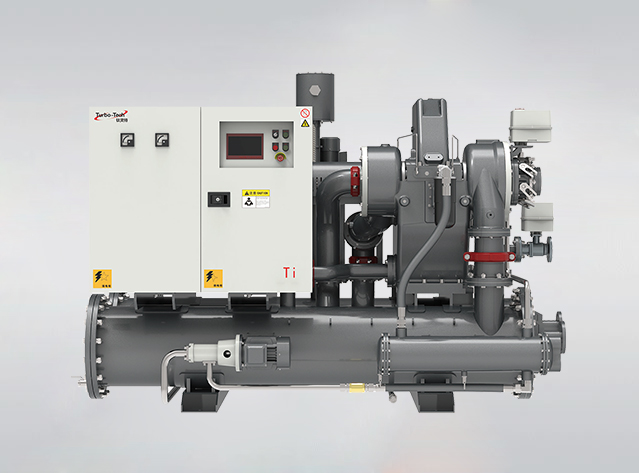
Ti series centrifugal air compressor
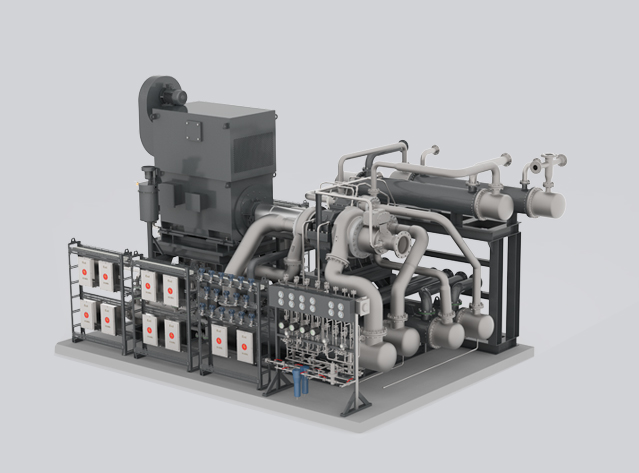
Ra series process gas compressors
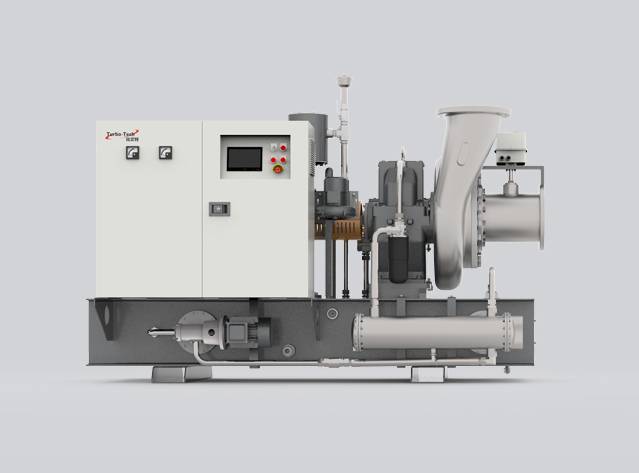
Ni series steam compressor
Tel:400-886-1856/+86 13395157738(Simon)
E-mail:sales@turbo-tech.cn / simonjin@turbo-tech.cn


