
Differences Between Centrifugal Fans and Centrifugal Compressors and Their Industrial Applications
Release time:2026-09-22 Click:72
As the two pillars of turbomachinery, centrifugal fans and centrifugal compressors share the same operating principle — converting gas energy through a high-speed rotating impeller — yet they exhibit markedly different technical characteristics and application scenarios in practice. The differences between the two stem from fundamental distinctions across multiple dimensions, including the degree of gas compression, pressure level, structural design, and energy consumption characteristics. Turbo-Tech will provide an in-depth analysis from three perspectives: their technical principles, their core differences, and their industrial applications.
I. Operating Principle: The Gas Dynamic Foundation Driven by Centrifugal Force
1.1 The Common Physical Principle
Whether it is a centrifugal fan or a centrifugal compressor, its basic operating principle is founded on gas dynamics. When the drive motor spins the impeller at high speed, gas enters the core region of the impeller axially and, driven by the high-speed rotating blades, is subjected to centrifugal force and thrown radially toward the outer edge of the impeller. During this process, the gas gains kinetic energy and its velocity increases; it then enters the volute-shaped diffusing passage, where the flow velocity gradually decreases while the static pressure rises, and it is finally discharged from the outlet at a higher pressure.
Specifically, the compression process of a centrifugal compressor can be divided into three core stages. First, the gas enters the high-speed rotating impeller axially through the inlet chamber and is thrown out radially under centrifugal force, greatly increasing its velocity and significantly boosting its kinetic energy. Second, the high-velocity airflow enters the stationary diffuser, where the cross-sectional area of the flow passage gradually expands and the airflow decelerates, converting kinetic energy into static pressure energy in accordance with Bernoulli's principle, so that the pressure rises. Third, the pressurized gas is collected by the volute and guided to the outlet, whose gradually expanding structure further reduces the flow velocity and stabilizes the pressure, achieving smooth output.
1.2 The Key Difference: Degree of Compression and Energy Conversion
However, the fundamental difference between this pair of "twin brothers" lies in the degree of gas compression they pursue. A centrifugal compressor seeks a significant increase in gas pressure, achieving high-pressure compression through multi-stage impellers arranged in series together with intercooling technology — its discharge pressure can reach several dozen atmospheres, comparable to the process of continuously inflating a balloon. By contrast, a centrifugal fan is mainly concerned with gas delivery volume, and its pressure rise is limited.
This difference leads to a fundamental divergence between the two in energy conversion efficiency, temperature-rise control, and structural design. A compressor must handle the significant temperature rise caused by gas compression and is usually equipped with interstage coolers to control temperature; a fan, however, does not require a cooling system because the heat effect of compression is negligible.
II. Core Differences: Number of Stages and Method of Pressure Boost
The structural hallmark of a centrifugal fan is its single-stage high-speed design. A single-stage high-speed centrifugal fan adopts axial air intake and is fitted with an inlet pre-swirl device ahead of the impeller to reduce intake losses. Because it employs a single-stage structure, the flow path is short and losses are small, delivering considerable economic benefits to users. This simple structural design gives centrifugal fans a marked advantage in applications requiring large flow rates and low-resistance piping.
The multi-stage series design of a centrifugal compressor reflects an entirely different technical approach. To achieve a high pressure ratio, a compressor typically requires 3 to 10 impellers arranged in series, with an intercooler after each stage to reduce gas temperature and prevent excessive temperature rise from degrading energy efficiency. The multi-stage design enables the compressor to handle a larger pressure ratio, but it also brings a corresponding increase in structural complexity and manufacturing cost.
III. Industrial Applications
3.1 Applications of Centrifugal Fans
Centrifugal fans have an extremely wide range of applications, with their core role being low-pressure gas ventilation and conveyance.
Wastewater treatment is an important market for centrifugal fans. Wastewater treatment plants with a capacity of tens of thousands of tons use centrifugal aeration blowers to supply air to biological reaction tanks, which is more energy-efficient than conventional Roots blowers. The stable operation of these fans directly affects both treatment performance and energy consumption.
In the power industry, centrifugal fans perform key functions such as boiler forced draft, induced draft, and desulfurization and denitrification. In plant desulfurization, ash and slag handling, and similar processes, the large-flow, low-resistance characteristics of fans come into full play.
Although the blast furnace air supply system in the metallurgical industry requires relatively high pressure, centrifugal fans still hold an important position in medium and large blast furnace installations thanks to their reliability. In addition, processes such as sintering and pelletizing require substantial support from centrifugal fans.
In the chemical and fertilizer industries — for desulfurization and decarbonization, fermentation aeration and ventilation, and powder conveying — centrifugal fans are likewise standard equipment. They also play an irreplaceable role in pneumatic conveying, powder handling, food processing, textiles, and chemical fibers.
3.2 Applications of Centrifugal Compressors
Centrifugal compressors focus on high-pressure gas compression requirements, and their application fields generally involve higher technical thresholds and added value.
The petrochemical industry is the traditional main battlefield for centrifugal compressors. In refinery catalytic cracking units, compressors provide the necessary power for catalyst fluidization; in ethylene and propylene production, processes such as cracked gas compression and refrigeration cycles all rely on large centrifugal compressors. A million-ton-scale ethylene plant typically requires multiple high-power multi-stage centrifugal machines, with single-unit power reaching several megawatts.
Air separation and industrial gases are relatively mature application scenarios for centrifugal compressors. In large air separation units, feed air is first compressed to an appropriate pressure by a centrifugal air compressor and then fed into a distillation column to separate products such as oxygen, nitrogen, and argon. For applications such as blast furnace oxygen enrichment in steel plants, high-purity nitrogen in electronics plants, medical oxygen supply, and nitrogen-flushed food packaging, the gas source can be traced upstream to centrifugal compression systems.
In the power and energy transition sector, the applications of centrifugal compressors continue to expand. In gas turbine combined cycle power plants, the compressor section compresses air to more than ten times atmospheric pressure before feeding it into the combustor, and compressor efficiency directly determines the overall thermal efficiency of the unit. In compressed air energy storage (CAES) plants, centrifugal machines handle the large-flow front-end pressure boost and are key equipment for achieving large-scale energy storage.
The rise of the hydrogen energy industry chain has opened up entirely new growth space for centrifugal compressors. Green hydrogen production, electrolyzer support, hydrogen boost storage and transport, and hydrogen refueling station circulation all impose new requirements on centrifugal compressors in terms of low-density gas compression capability and adaptability to varying operating conditions.
In carbon capture, utilization, and storage (CCUS) projects, carbon dioxide must be compressed to a supercritical state by high-pressure centrifugal machines from capture through pipeline export or injection into geological formations. More than 70 CCS projects have been built worldwide, and centrifugal compressors are among their core equipment.
3.3 The Rise of Emerging Application Fields
The rapid development of the new energy and new materials industries is reshaping the application landscape for centrifugal compressors. New energy plants — lithium battery, photovoltaic, and polysilicon facilities — have an urgent need for clean, high-volume gas sources, and the advantages of centrifugal compressors, such as oil-free air production and reliable pressure stability, make them the preferred choice. In precision processes such as material purification, process purging, and system leak testing, the cleanliness performance of compressors directly affects product yield.
Demand from the pharmaceutical and food industries for ISO Class 0 oil-free compressed air continues to grow. Production processes such as fermentation aeration, pharmaceutical filling, and beverage carbonation require high-purity gas throughout, and oil-free centrifugal compressors, which meet GMP requirements, have found a broad market in the pharmaceutical and food sectors.
IV. Turbo-Tech Compressors: A High-End Manufacturer Focused on Centrifugal Compression Technology
In the field of centrifugal compressor manufacturing, Turbo-Tech is a specialized enterprise dedicated to the research, development, and manufacture of high-end centrifugal compression technology. Turbo-Tech has built a complete product matrix covering the Ti series of small- and medium-flow oil-free air compressors; the Mn(H) series of large-flow compressors for air separation, energy storage, and petrochemical applications (pressures up to 16 MPa); and the Ra series of process gas, hydrogen, carbon monoxide, and coal chemical compressors (pressures up to 40 MPa).
The above is an introduction to "Differences Between Centrifugal Fans and Centrifugal Compressors and Their Industrial Applications." Centrifugal fans, with large flow and low resistance as their core advantages, serve a wide range of low-pressure applications such as ventilation and air exchange, wastewater treatment, and boiler auxiliaries; centrifugal compressors, excelling in high pressure, high energy efficiency, and continuous operation, are core equipment in high-end industrial fields such as petrochemicals, air separation, and the energy transition. If you would like to learn more about centrifugal fans or centrifugal compressors, you are welcome to contact Turbo-Tech sales.
Hot products
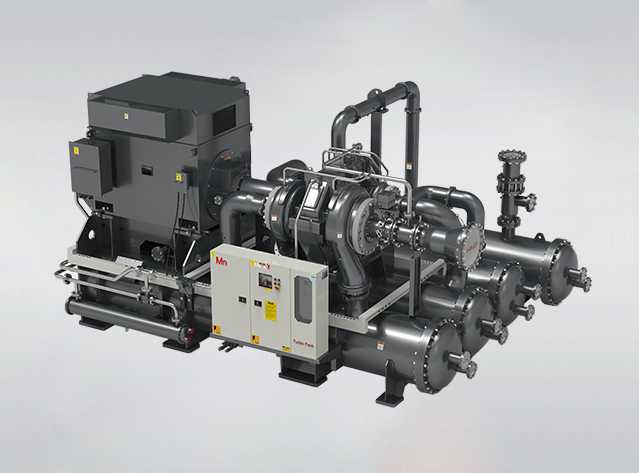
Mn (H) series centrifugal compressor
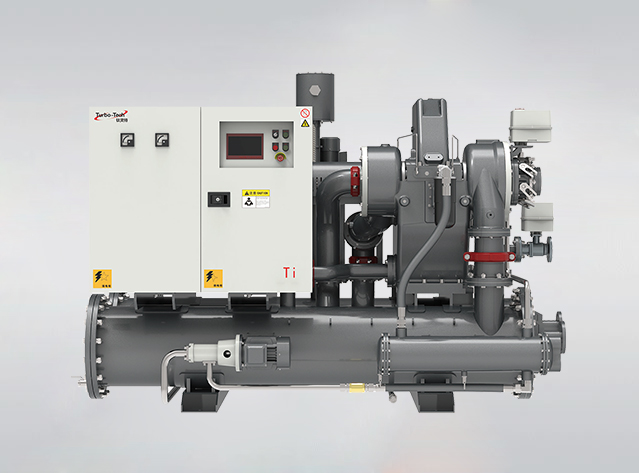
Ti series centrifugal air compressor
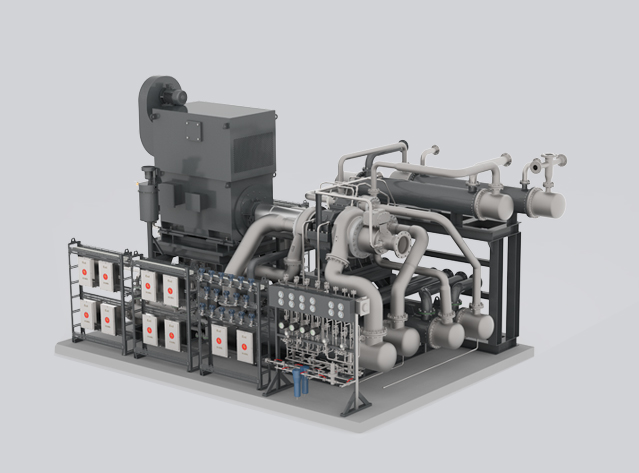
Ra series process gas compressors
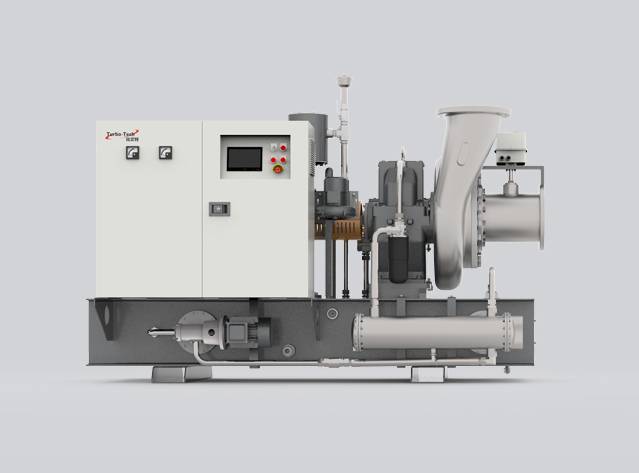
Ni series steam compressor
Tel:400-886-1856/+86 13395157738(Simon)
E-mail:sales@turbo-tech.cn / simonjin@turbo-tech.cn


